

Class Registration and Orientation
UWRF Orientation
Phone: 715-425-3531
Email: orientation@uwrf.edu
Location: 174 Rodli Hall
Hours: 8 a.m.-4:30 p.m., M-F
You're officially #TheNextFalcon! We're so excited for you to take the next steps on your journey at UWRF.
So, what's the first step of this new student transition experience? Sign up for registration! This is when you'll meet with your adviser and choose your classes.
Sign Up to Register for Classes
Once you sign up, watch your email for additional information and next steps as your registration day gets closer.
Complete a Placement Option
We need you to complete a placement option so your adviser can help you pick the best classes for you. Your adviser will be your best resource to determine which placement option is right for you, your major and your previous credits. Please reach out to them for help choosing a placement option if you are unsure. Choose from the following options:
- Complete the online placement tests. This is UWRF’s preferred option for the most accurate placement.
- Send your ACT score to admissions@uwrf.edu.
- Send official transcripts or score reports if you have already earned college credit for a math or English class.
Visit our placement testing page to learn more and sign up for placement testing.

Move In!
Move In is slated for Saturday, Aug. 29. You’ll receive an email from Residence Life to select an appointment time to move in. If you cannot move in on the move-in dates, email reslife@uwrf.edu.

Attend Orientation Beginning Aug. 30
Check your UWRF email or residence hall posters for the schedule of events and activities.

Attend Week of Welcome
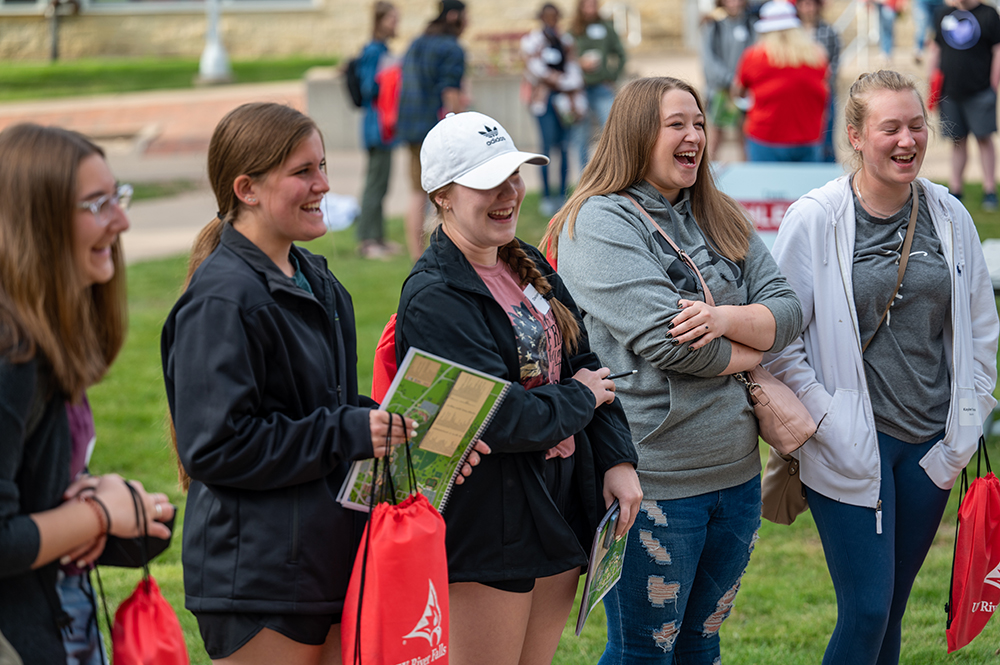
Week of Welcome (WOW) events take place during your first week at UWRF. From the Involvement Fair to Late Night Great Night, you'll find free food, giveaways and fun for everyone. Learn how to get involved on campus, make new friends and begin to make UWRF your new home!


Have a unique situation not covered above? Explore below for additional information on your Orientation and Registration process.
International Students
The Office of International Education will connect with you to register for classes. You'll attend Orientation with all other new students August 30-31. Email vanessa.luther@uwrf.edu with questions.
Online Students
Talk with your adviser at registration to enroll in all online courses. Whether you're in-person or online, Orientation and Week of Welcome will set you up for success throughout your degree program and we would love to have you on campus!
Re-Entry (Returning to UWRF) Students
Once you have completed the re-entry process, be sure to check your email for your class registration process. You are still encouraged to attend Orientation and Week of Welcome events to set yourself up for success!
High School Students Taking College Courses
- Early College Credit Program (ECCP): If you're an admitted ECCP student taking courses at UWRF while in high school, we will communicate next steps and help prepare you for class registration. ECCP students don't need to attend in-person Orientation. Email admissions@uwrf.edu with any questions.
- Dual Academic Credit (DACP) Students: If you're an admitted DACP student earning UWRF credit at your high school, you'll work directly with your high school to register for classes and don’t need to attend in-person Orientation.
Connect Early with these Campus Resources
There are steps you can take now to be ready for your first semester. Explore below to learn more about activities and offices on campus. Don't hesitate to reach out if you have questions!
Honors
Engaged community with customized support for students entering UWRF in the top 10% of their high school class OR with a 3.75 or above GPA.
Student Support Services/TRIO
TRIO SSS provides free academic coaching, leadership opportunities and financial aid support to reach your degree goals.
Marching Band
Marching Falcons is a great place to make new friends. Open to all UWRF students, regardless of major. Early move in for camp in August.
On-Campus Employment
Log in to Handshake to search for on-campus student job opportunities.
Military and Veteran Services
Assistance and info for veterans and eligible dependents.
Falcon Links
Guidance, support and resources for students who have been in foster care, homeless or orphaned.